Replacement or second line? How to decide whether to replace your current printer or add a second production line

In short: Replacement makes sense when the current system itself becomes the source of rising cost and risk. A second line may be the better choice when the existing printer still runs reliably but you need more capacity, flexibility or production continuity. A second line can also be the first stage of a later replacement, letting you migrate production without the pressure of immediately switching off a working line.
A company has been printing on anodised aluminium for years. The process is well known, the operators are experienced, key jobs have been optimised many times over, and the current machine is still handling production.
At the same time, the order structure is changing. There are more short runs, language variants, QR codes and serial data. Customers expect faster turnaround. It is getting harder to find room in the schedule for an urgent order. And there is the question of what will happen to production if the only printer stops for several days.
At that point, the need for another investment comes up naturally.
Should the current system be replaced?
Or is it better to keep it in production and set up a second line alongside it?
This is not just a decision about choosing another printer. In practice, it is a decision about the architecture of your production process for the years ahead.
Replacement and a second line may both mean buying a machine of a similar class, but from a process point of view they answer completely different needs.
| Area | Replacement | Second line |
|---|---|---|
| Main goal | removing a costly or risky system | increasing capacity and redundancy |
| Current machine | increasingly difficult or expensive to maintain | still running reliably |
| Implementation risk | higher if migration happens in one go | lower thanks to parallel operation |
| Capacity | replaces the existing production capacity | increases total production capacity |
| Redundancy | exists only if a second line remains | a natural part of the scenario |
| Migration | must be prepared before the switch | can happen gradually |
So the most important difference is simple: replacement is mainly meant to remove the problem of the existing system, while a second line is meant to increase the resilience and capabilities of the whole process. In practice, the boundary between these scenarios can be fluid – a second line often becomes the first stage of a later migration.
Replacement makes sense when the current system becomes the problem
The age of a printer alone should not be an argument for replacing it. An industrial machine can run for many years and still perform the tasks it was configured for very well.
The time to analyse a replacement comes when the cost of maintaining a predictable process starts to rise.
This does not have to mean frequent breakdowns. Sometimes the first sign is a growing number of small interventions that are almost invisible from the outside.
The operator corrects settings more often. Rerunning an older job means hunting for the parameters again. More test runs are needed before actual production starts. Diagnosing faults takes longer. Parts availability becomes less predictable. The software or RIP is no longer developing in a direction that matches the company’s current needs.
The machine still prints, but it takes more and more time, know-how and money to keep it in a stable process.
In that situation, the right question is no longer “Is the machine working?”, but:
Is it still the right platform for the production planned for the next five years?
If the cost of maintenance, operator time, reprints, service and risk starts to grow, replacement may be justified even if the machine is technically still doing its job.
A second line solves a different problem
A completely different scenario is also possible.
The current printer runs reliably. Quality is repeatable. The operators know the process well. Access to service and parts is not a major issue.
What becomes the constraint is capacity.
Jobs start to queue. Urgent production means pushing other orders back. Short runs squeezed in between larger runs increasingly disrupt the schedule. There is more and more work requiring serialisation, codes, language versions or quick file changes.
In that case, replacement may mean getting rid of a process that still works properly.
Setting up a second line may be far more rational.
The existing machine continues to handle well-established, repeatable production. The new system takes over the part of the work that needs more flexibility or causes the biggest disruption to the schedule.
The company is not replacing technology just because a newer platform exists.
It is splitting production according to the actual structure of its orders.
Capacity is not just printer speed
When planning a second line, it is very easy to focus on the machine’s output.
How long does it take to print a sheet? How many square metres can be printed per hour? How fast is the new machine compared with the current one?
These are of course important parameters, but on their own they do not show the throughput of the plant.
In a real process, time is not spent only on printing. File preparation, opening or recalling a job, setting up the material, changeovers, operator handling, inspection and any reprints all matter.
When printing into the open pores of anodised aluminium, you also have to factor in sealing and the subsequent finishing stages.
It may therefore turn out that installing a faster printer does not increase total output proportionally, because the constraint immediately shifts to the next stage.
That is why capacity should be analysed across the entire flow:
file – job preparation – printing – sealing – inspection – further processing.
Only then can you determine where the real bottleneck is.
If the problem is the printer itself, a second line can significantly increase the plant’s capabilities. If the bottleneck is elsewhere, that stage needs to be sorted out first.
This is one of the fundamental differences between buying a machine and designing a process.
A second line as a safeguard for production continuity
Capacity is not the only argument for a second machine, though.
In many plants, redundancy is just as important.
If all production of a given type of marking depends on one printer, the company has a single critical point in its process. As long as the machine is working, the risk is practically invisible.
A simple simulation shows it best.
What happens if the only printer stops for two or three days?
Production cannot then be judged solely in terms of lost machine hours. You have to take into account subsequent orders, delivery deadlines, the work of downstream departments, possible outsourcing, additional logistics and any overtime once the line is back up.
With key customers, the consequence may also be the risk of missing an agreed deadline.
That is why a second machine can be valuable even if it is not running at full load all the time.
Part of its value is the ability to keep production going when something goes wrong.
Two machines do not always mean two production capabilities
Simply having a second machine does not automatically give you redundancy, however.
This is one of the most important elements of the whole decision.
If the second line is really to take over production in the event of a breakdown, it has to be prepared for this at the process level.
The most important jobs should be reproduced in advance. Profiles and parameters must be validated. Operators should know the machine. Critical colours must be checked and the result after sealing approved.
If the second machine spends months as a purely theoretical backup and no one tests it on real orders, then when the main line stops it may turn out that just transferring production takes too long.
So true redundancy does not mean:
“We have two printers.”
It means:
“We have two validated ways of producing a critical product.”
That is a completely different approach to production continuity.
A second line can reduce the risk of a future replacement
A second line has one more important advantage.
It lets you change technology without moving all production in one go.
A company that has worked on one system for years has built up much more than a fleet of machines. It has a library of jobs, its own profiles, material recipes, reference samples, procedures and operator know-how.
Recreating that entire environment on a new platform in a single step can be risky.
A much safer model is to run both systems in parallel.
First, the new platform goes through a benchmark on real material and real files. Then several to a dozen or so key jobs are reproduced. Parameters, profiles and quality criteria are prepared.
Only then does the new system start taking over day-to-day production.
The old machine remains available.
This means the comparison takes place not under demo conditions, but during the plant’s normal work. You can observe job preparation time, the number of corrections, production stability, operator workload, waste and the final result after sealing.
On this basis, the company can gradually decide which groups of orders to keep on the existing technology and which to move.
Replacement then stops being a one-off event.
It becomes a controlled process migration.
The second line does not have to do exactly the same work
It is also worth answering the question of whether both printers really need to do identical tasks.
If full redundancy is the priority, a high degree of process compatibility between the lines is very important.
If, however, the main aim of the investment is greater flexibility, the split may look different.
The existing platform can continue to run stable, well-optimised production. The second can be dedicated to short runs, full colour, versioning, serialisation and jobs that require frequent changes.
A similar logic can work in companies that use screen printing. Long, repeatable runs stay where the process is most efficient, while digital takes over the work in which set-up time, the number of versions and frequent changeovers start to erode the margin.
For plants using Metalphoto, the new line does not have to replace the existing technology either. It can expand the portfolio with other types of production and a more flexible digital workflow.
So a second line does not have to mean “a second identical printer”.
It can mean a second production capability designed for a different type of work.
More machines will not fix a badly organised process
There is another side to this decision too.
Not every problem with on-time delivery and productivity means you need to buy another printer.
If the current machine has plenty of idle time and orders are still running late, the problem probably lies elsewhere.
It might be file preparation, material handling, sealing, quality control or further processing.
Similarly, installing a second machine will not solve the problem if the source of losses is unstable material or a lack of well-defined process parameters.
In that case, the company may simply end up with two workstations that duplicate the same problem.
That is why an investment decision should start with an analysis of the flow, not with a catalogue of machines.
Status quo, replacement or second line: how to compare the three scenarios
The most rational approach is to compare three scenarios.
The first is keeping the current system. In this case, you need to estimate not only the cost of further servicing, but also the consequences of limited capacity, potential downtime and the lack of redundancy.
The second is replacement. Here, on top of the CAPEX of the new platform, you have to add the cost of migrating jobs, preparing profiles, training and the implementation period.
The third is a second line. Here, in addition to the extra production capacity, you need to put a value on safeguarding the process and on the option of transferring production gradually.
Only comparing these options over a horizon of several years shows which of them is genuinely the most beneficial.
The solution with the lowest CAPEX will not always win.
Nor will the option with the highest nominal output.
The best scenario is the one that addresses the plant’s real constraint.
IMAGO as a partner in process design
At IMAGO, we do not assume that the next investment has to mean immediately replacing the existing machine.
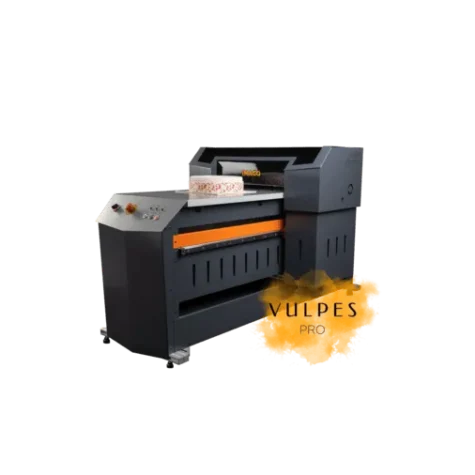
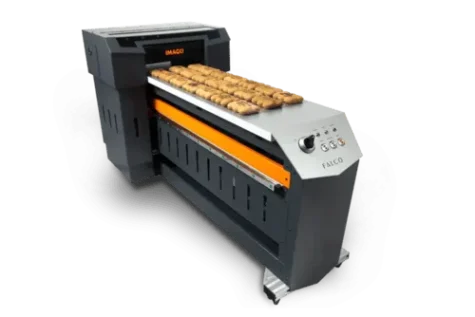
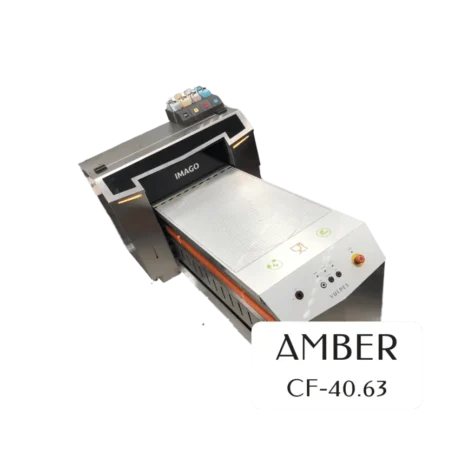
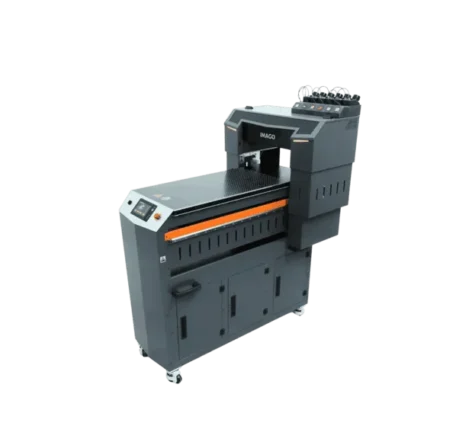
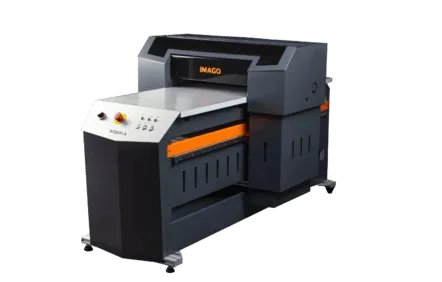
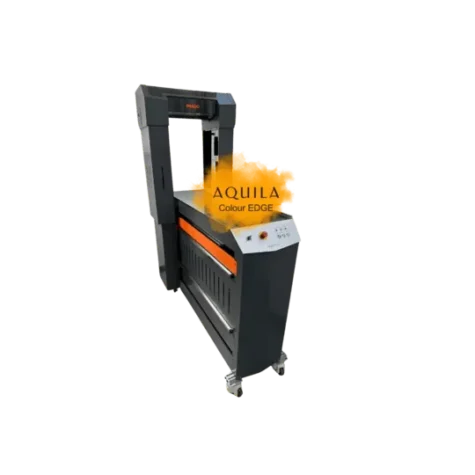
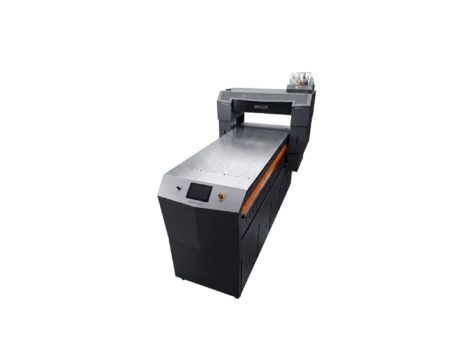
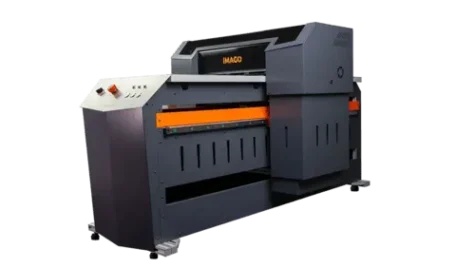
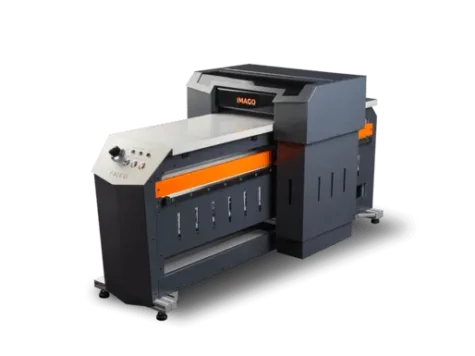
The NF Series can serve as a replacement, as a second line that increases capacity, or as a platform that enables gradual migration of production.
The starting point, however, is understanding the current process.
What does the job structure look like? Where do queues form? How often are short runs produced? Which orders are critical? What does sealing look like? What happens if the main line stops? Which jobs should have a backup ready?
Only once these dependencies are understood can you say which configuration makes sense.
If migration is being considered, the most reliable first step is still a benchmark on the customer’s real material and file. Then key jobs can be reproduced and the new platform tested under conditions that reflect normal production.
This approach limits risk and allows decisions to be based on data rather than claims.
Problem first. Production architecture second
Replacement will be the right solution when the current platform becomes a source of rising cost and risk.
A second line may be the better choice if the existing system still runs reliably but the company needs more capacity, flexibility or protection of business continuity.
It can also become the first stage of a future replacement, allowing migration without the pressure of immediately switching off a working line.
There is no single right scenario for every manufacturer.
There is, however, a right order of decisions:
first understand the problem, then measure the process, and only then decide on the architecture of your machine fleet.
Because the goal of the investment is not to buy another printer.
The goal is a more resilient, predictable and economically justified production process.
FAQ: replacement or a second production line
What is the difference between replacing a printer and adding a second line?
Replacement is mainly meant to remove the problem of an existing system that has become costly or risky, and it replaces the current production capacity. A second line increases total capacity and redundancy, carries lower implementation risk thanks to parallel operation and allows gradual migration. In practice, the boundary is fluid: a second line often becomes the first stage of a later replacement.
When does replacing a working anodised aluminium printer make sense?
It is worth analysing a replacement when the cost of maintaining a predictable process starts to rise: more frequent setting corrections, hunting for parameters on repeat jobs, more test runs, longer fault diagnosis, less predictable parts availability, or software or a RIP that is no longer being developed in line with the company’s current needs. If these costs keep growing, replacement may be justified even though the machine still works. The key question is whether the machine is still the right platform for the next five years.
When is a second production line the better choice?
It may be the better choice when the current printer runs reliably, quality is repeatable and service and parts are available, but capacity has become the constraint. Typical signs are queuing jobs, urgent orders pushing others back, short runs disrupting the schedule and more work requiring serialisation, codes, language versions or quick file changes.
Will a faster printer increase the plant’s output?
Not necessarily. Throughput depends on the entire flow: file, job preparation, printing, sealing, inspection and further processing. If the bottleneck is elsewhere, a faster printer will not increase total output proportionally, because the constraint simply shifts to the next stage. That stage needs to be sorted out first.
Do two printers automatically give you redundancy?
No. For a second line to take over production after a breakdown, key jobs must be reproduced in advance, profiles and parameters validated, operators familiar with the machine, critical colours checked and the result after sealing approved. True redundancy means two validated ways of producing a critical product, not just two printers.
How do you compare status quo, replacement and a second line?
Compare all three over several years. For the status quo, include servicing plus the consequences of limited capacity, potential downtime and no redundancy. For replacement, add migration, profiles, training and the implementation period to the CAPEX. For a second line, value the extra capacity, process protection and gradual transfer. The best scenario addresses the plant’s real constraint.