THE ECONOMICS OF PERSONALISATION

How digital food printing turns product variety from a production burden into a commercial advantage
Personalisation is no longer just an attractive extra in the confectionery industry. It is an opportunity to win new customers, increase product value and respond to changing market demands. But for manufacturers, every new design, customer request or limited edition can also mean additional work, time and production complexity.
Imagine three enquiries landing on your sales team’s desk:
- A hotel wants 1,200 chocolates printed with its logo.
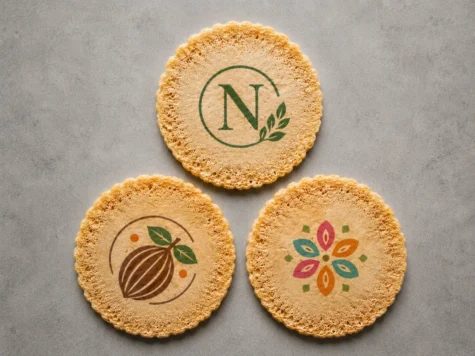
- A cosmetics brand needs 500 branded biscuits for a product launch in ten days.
- A retailer is looking for a limited Christmas edition.
From a sales perspective, these are three promising opportunities. From a production perspective, they could mean three separate jobs, different deadlines and additional preparation.
The real challenge is not simply finding more things to print. It is finding a way to offer more product variations without turning every new design into a separate production project.
This is where digital food printing can make a measurable business difference.

The real cost is often the cost of change
Confectionery manufacturing is built around consistency, efficiency and repeatability. Yet customers increasingly expect products that reflect a specific brand, occasion, campaign or personal message.
Not all forms of personalisation come with the same operational cost.
Changing a recipe can affect ingredients, allergen management and cleaning procedures. Introducing a new mould may require additional tooling. Creating a new packaging version can involve minimum order quantities, longer lead times and additional stock.
Changing a digital design, however, can be much simpler.
In manufacturing, this principle is closely related to delayed differentiation: keeping the standard part of a product consistent and introducing customer-specific elements later, when actual demand is known.
For confectionery manufacturers, the business logic is straightforward:
Keep the expensive production processes repeatable. Make the final layer of personalisation easy to change.
Digital printing helps make this approach practical.
The value is not in the ink
A company ordering branded chocolates for a conference is not buying edible ink. It is buying a product that represents its brand and belongs to a particular event.
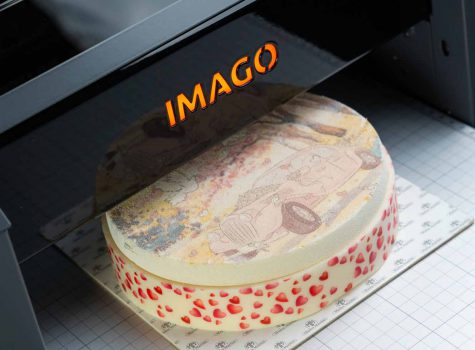
A wedding customer is buying names, a date and a personal touch. A cosmetics brand is buying another way to connect with its audience through a campaign.
That distinction changes the way manufacturers should evaluate personalisation.
Instead of asking, “How much does printing cost per piece?”, the more relevant question is:
How much additional value can we offer our customers, and what does it cost us to deliver that value consistently?
Sometimes the biggest commercial benefit is revenue that was previously out of reach.
Consider an order for 350 personalised chocolates. If fulfilling it requires a dedicated tool, extensive hand decoration or 2,000 units of custom packaging, the manufacturer may have to reject the order, charge a premium or struggle to meet the deadline.
Digital printing can change that equation. When a new design does not require rebuilding the entire decorating process, smaller and more varied orders become easier to accommodate.
This can open the door to short production runs, urgent orders, corporate gifts, local marketing campaigns and limited editions.
One product. More reasons to buy.
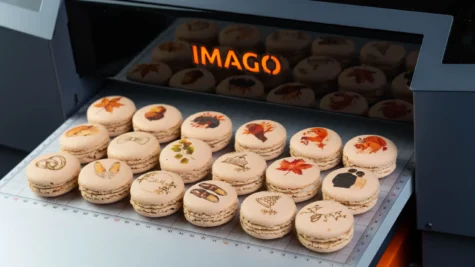
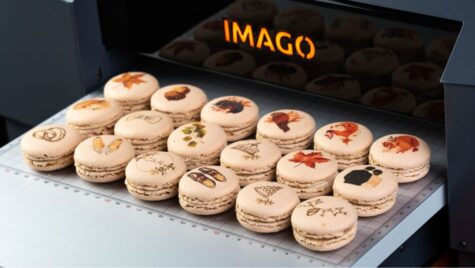
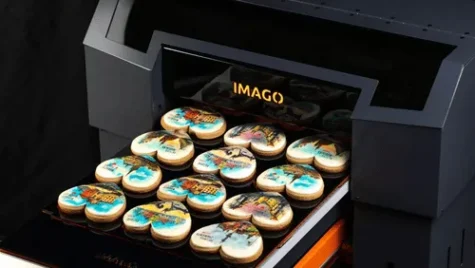
A biscuit, praline, macaron or chocolate tablet does not necessarily need a new recipe every time its commercial purpose changes.
The same base product can become a corporate gift, a wedding favour, a seasonal edition or a personalised present through a different final decorative layer.
For manufacturers, this creates an important opportunity: more ways to sell products they already know how to make well.
It also offers greater flexibility when dealing with seasonal demand.
Christmas, Valentine’s Day, Easter and other seasonal occasions have limited commercial windows. The earlier a manufacturer commits to specific designs and finished variations, the more decisions must be made before actual demand is known.
By introducing the final design later, manufacturers can reduce the amount of finished product variation they need to plan in advance.
Digital printing does not eliminate forecasting risk, but it can help limit the operational and inventory burden associated with producing multiple versions of the same product.

Remove repetitive steps. Preserve craftsmanship.
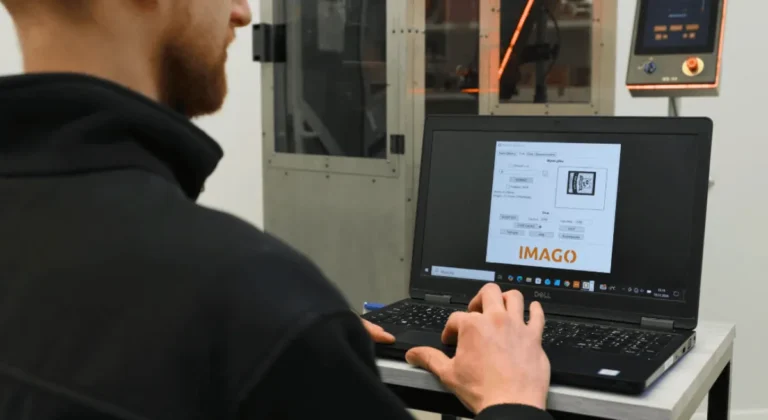
A well-designed digital printing workflow can be remarkably straightforward:
- Receive or prepare the artwork.
- Position the design digitally.
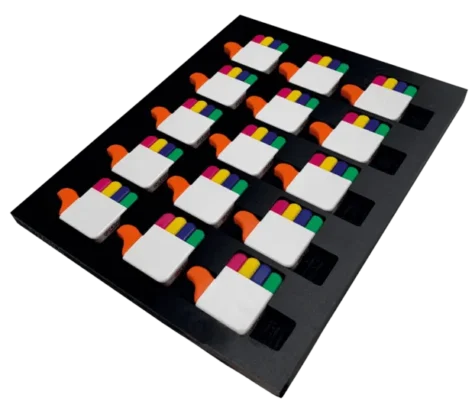
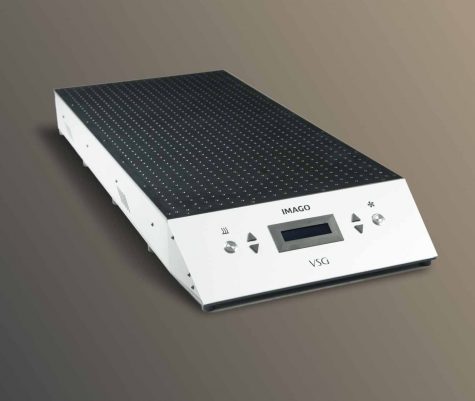
- Place the products on the printing area or in a production jig.
- Print.
- Change the artwork for the next customer or order.
The potential gain is not limited to printing speed. It also comes from reducing repetitive preparation and decoration tasks.
This does not mean replacing craftsmanship with automation.
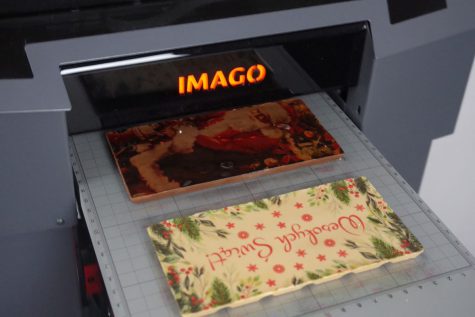
Digital printing and traditional hand finishing can complement each other exceptionally well. A printer can reproduce logos, photographs, patterns and text with consistency, while skilled confectioners add piping, chocolate details, gold accents or textures that give a product its premium character.
A machine excels at repeatability. A person brings judgement, experience and creativity.
The most effective production processes allow technology and craftsmanship to do what each does best.
Food is not paper: consistency is everything
The commercial benefits of digital printing only matter when the process is reliable.
Unlike paper, confectionery products are rarely uniform, flat surfaces. Chocolate, biscuits, macarons and dragées can vary in shape, texture, colour and surface properties.
Factors such as moisture, fat content, product temperature, curvature and condensation can influence the final print result.
Different designs also create different challenges. A small logo, fine lettering and a full-colour photograph are not necessarily the same production task.
That is why an attractive sample is only the starting point.
The real test is whether the printing process can deliver consistent, saleable results at the quality, speed and cost required by the business.
The most meaningful performance measure is not simply printhead speed. It is the number of finished products that meet quality requirements and can reliably move through the complete production process.
Digital printing is not just for short runs
For a small confectionery business, digital printing may provide the flexibility to personalise dozens or hundreds of products.
For a growing manufacturer, it can support recurring corporate orders, larger production volumes and more automated workflows.
For an industrial producer, the question becomes different:
How can variable decoration be integrated into a high-volume production process without disrupting its flow?
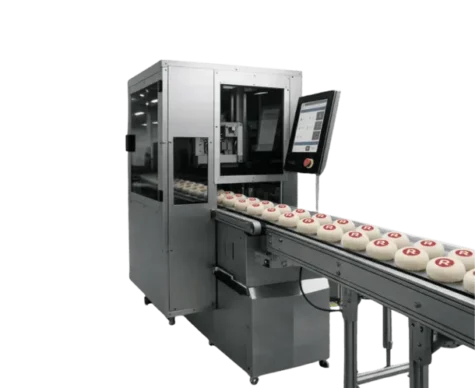
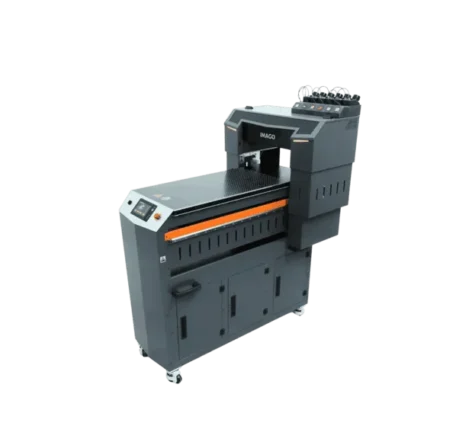
This is where inline and single-pass printing systems become relevant.
At industrial scale, digital printing can become an integrated part of a production line, combining the efficiency of repeatable manufacturing with the flexibility of variable designs.
Producing one million identical products is one challenge. Producing one million products across different customers, markets, campaigns and designs is another.
Scale does not make digital printing less relevant. It changes the type of technology and production architecture needed to make it work.

Start with an order, not a machine
For manufacturers considering digital food printing, the best starting point is not a machine specification sheet. It is a real business opportunity.
Choose three actual orders:
- One typical order that represents your everyday production.
- One difficult order that creates operational challenges.
- One attractive opportunity that your current process makes difficult to accept.
For each order, analyse the selling price, quantity, labour requirements, lead time, rejects and current decoration costs.
Then test the product and measure the entire process, from approved artwork to packed, saleable pieces.
The final question should not be simply, “Can we print this?”
It should be:
Can we produce this reliably, repeatedly and profitably?
The best digital printing application is not necessarily the one that creates the most impressive sample. It is the one that makes a real customer order easier to accept, easier to fulfil and profitable to repeat.
Customers want relevance. Production needs repeatability.
Digital food printing can connect the two — turning personalisation from an additional production challenge into a genuine source of commercial advantage.