UV Printing on Different Materials – A Practical Guide for Production

What can you actually print on with UV technology? It’s the first question we hear from almost every business owner considering an industrial printer. The short answer: dozens of different substrates. Plastics, metals, glass, wood, leather, even cardboard. Among the biggest advantages of UV printing are its versatility and its ability to handle a wide range of materials, which can lead to significant cost and time savings.
Understanding how different substrates interact with UV inks and the light curing process is crucial to optimizing print quality and expanding your product offerings. By selecting the right materials, you can expand your range of applications and attract more clients, ultimately driving business growth in UV printing.
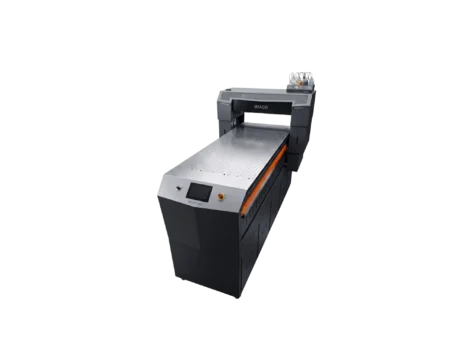
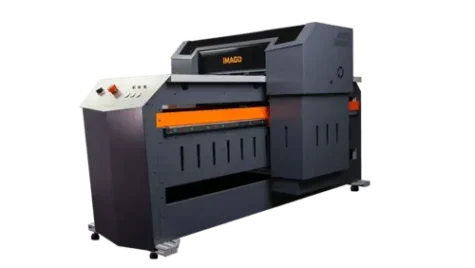
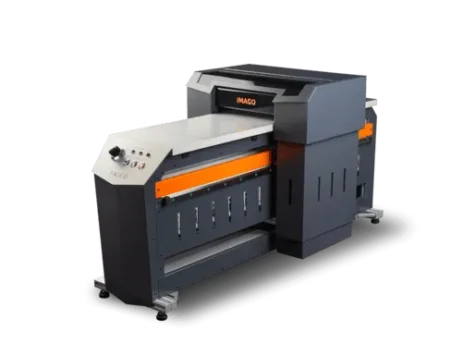
This guide walks through specific material categories, shows typical applications, and flags what to watch for when planning production. We’re IMAGO Printer, a Polish manufacturer of industrial UV LED printers, and the knowledge here comes from thousands of tests run in our Proof Lab.
What materials can you print on with UV? (the quick answer)
UV printing covers substrates that not long ago required separate technologies, screens, and matrices for each one. Because UV ink cures instantly under ultraviolet light, you can run different materials on the same machine without losing the day to changeovers. UV printing is commonly capable of resolutions up to 1200 DPI, delivering sharp, detailed images across a wide range of applications.
The main substrate groups we print on regularly:
Plastics:
- ABS – electronics housings, office gadgets, equipment components
- PP and PE – containers, packaging, industrial labels
- PC (polycarbonate) – control panels, nameplates
- PMMA / acrylic / plexiglass – light boxes, backlit signage, decorative elements
- PVC – rigid panels, banner stock, window films
- HIPS – POS displays, exhibition stands
- Dibond – exterior signage, large-format advertising boards, building facades
Metals:
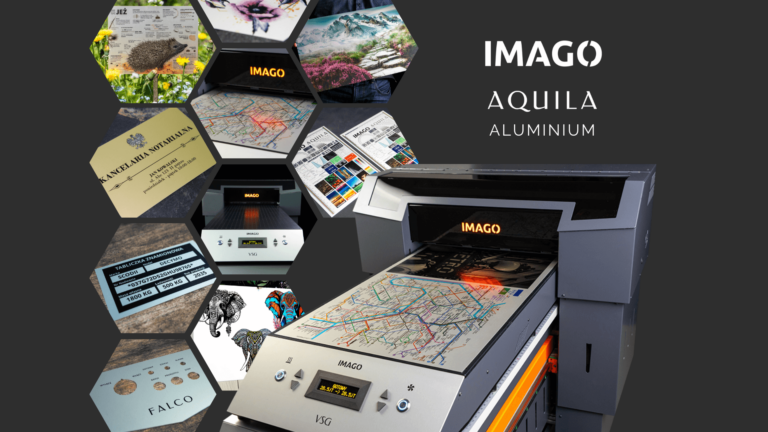
- Raw and anodized aluminum – nameplates, decorative panels
- Stainless steel – machine markings, safety signage
- Coated sheet metal – housing components, promotional items
Glass and ceramics:
- Tempered glass – kitchen splashbacks, office glass panels
- Float glass – artwork, wall decoration
- Ceramic tiles – personalized bathroom and kitchen tiles
- Porcelain – mugs, promotional plates
Wood and wood-based materials:
- Raw and lacquered MDF – furniture fronts, wall panels
- Plywood – displays, decorative elements
- Solid wood – cutting boards, gift boxes
- Veneers – premium gadgets, covers
Special materials:
- Natural and synthetic leather – belts, wallets, keyrings, notebook covers
- Coated textiles – labels, fabric covers
- Paper and cardboard – premium business cards, packaging, presentation cases
- Composites – acoustic panels, sandwich boards, layered substrates
UV printers are compatible with both rigid and flexible substrates, making them ideal for a wide variety of projects. Choosing the right substrate is essential for achieving optimal ink adhesion, curing, and the best print quality.
Flexible substrates such as vinyl, banners, leather, PET, and cardstock are commonly used for outdoor graphics, fashion, and packaging. Roll-to-roll printing is especially efficient for flexible substrates like vinyl and banners, allowing for scalable production of large-format graphics.
UV printing allows for crisp, durable prints on nearly any substrate, including non-porous and ink-resistant materials.
If you have something that’s not on the list, send us a sample. Our Proof Lab runs adhesion tests, dials in parameters, and tells you straight whether UV printing fits your case or not.
Why UV works on so many substrates
Traditional print methods rely on the ink soaking into the material. That’s why offset works beautifully on paper but fails on glass or metal. UV is a different game.
UV inks are polymer-based and don’t absorb into the surface. They sit on top as a thin, durable layer. When UV light from LED lamps hits the freshly applied ink, the chemistry shifts in milliseconds – it’s a process called photopolymerization. The chemical bond created by UV curing provides high resistance to scratches and water, making the print exceptionally durable.
The simple version of what happens on the machine:
- The print head lays down UV ink on the surface
- The LED lamp emits ultraviolet light
- Monomers in the ink crosslink into a hard coating
- The print is ready for the next operation within seconds
What this means for your production:
- No absorbency limits. Paper, glass, metal – same machine handles all of them
- Non-porous surfaces, such as smooth, coated, or sealed materials, are ideal substrates for UV printing because they ensure proper ink adhesion and durability
- One investment, multiple markets. Promotional gadgets, industrial markings, interior decor
- Print on flat and slightly irregular surfaces. Height variation up to 10 mm isn’t a problem
- The cured layer resists scratches, moisture, and weather
Compared with solvent or offset, UV gives you broader material flexibility. Solvent needs substrates that can absorb the carrier. Offset needs specific coatings. UV handles a wider range without those constraints.
UV printing on plastics
Plastics are the most common substrate group when companies invest in a UV printer. The reason is everywhere you look: packaging, gadgets, signage, machine components are mostly plastic. Wide variety of plastics means wide application potential.
ABS (acrylonitrile butadiene styrene):
- Electronics housings, equipment panels
- Branded gadgets – USB drives, power banks
- Internal machine components
- Excellent ink adhesion without primer
PP (polypropylene) and PE (polyethylene):
- Food containers, transport boxes
- Cosmetic packaging
- Industrial labels for tough surfaces
- These plastics may resist ink and require primers or surface treatment for optimal results in UV printing.
PC (polycarbonate):
- Machine control panels
- Safety signage with pictograms
- Transparent housings and shields
- High mechanical resistance of the print
PMMA / acrylic / plexiglass:
- Illuminated displays and light boxes
- Signage in public buildings
- Display and decorative pieces
- Vivid colors and sharp detail on transparent stock
PVC (rigid panels):
- Outdoor advertising materials
- Long-term informational signage
- Building identification elements
- Weather resistance makes it a go-to for exterior work
HIPS (high-impact polystyrene):
- POS displays and retail stands
- Indoor promotional materials
- Exhibition components
Dibond (aluminum-PE composite):
- Weather-resistant exterior signs
- Large-format advertising boards
- Building facade signage
- Holds up at large formats without losing print quality
Each material in UV printing may require specific adjustments, such as primer selection, curing settings, or color management, to ensure proper adhesion and color accuracy.
For tougher plastics like PP or PE, we use primer. It’s a base coat that boosts ink adhesion. In our Proof Lab we match the primer type, the number of white passes, and head height to optimize both durability and throughput.
UV printing on plastics in actual production
The typical flow:
- The customer sends samples of their material (say, ABS housings)
- We test adhesion and dial in the print profile
- We run abrasion and chemical resistance tests
- We hand back recommended production parameters
UV printing on plastics allows you to quickly create detailed, complex images and support variable data without the need for physical clichés.
Products that come out of UV plastic printing every week:
- Office gadgets and rulers with company branding
- USB drives and power banks with full-color graphics
- Machine front panels with pictograms and instructions
- Labels with QR codes and variable numbering
- Information plates and safety markings
The real win is profitability from a single piece and fast project changes. Personalization and short runs become viable because there are no matrices, screens, or setup costs to amortize.
UV printing on metal
Metal is the first-choice substrate for industrial markings, nameplates, and machine branding. Direct UV printing replaces stickers and engraving and gives you a permanent print on the surface itself.
Metals we print on regularly:
- Raw aluminum – light, easy to work with
- Anodized aluminum – higher aesthetic class, corrosion resistance
- Stainless steel – maximum durability in harsh conditions
- Coated sheet metal – housings, decorative panels
Common applications:
- Nameplates with serial numbers and tech data
- Front panels for industrial equipment
- Safety signage in production halls
- Decorative aluminum panels for offices and commercial spaces
- Machine markings that meet compliance standards
What we pay attention to with metal:
- Surface degreasing before print
- Right primer for the material
- Scratch and impact resistance testing
- Solvent exposure trials for industrial use
If your nameplates need to meet specific norms – chemical resistance, decade-long legibility, harsh environment exposure – the Proof Lab runs the right tests before you commit to a printer.
UV printing on anodized aluminum and stainless steel
Anodized aluminum sits at the higher end of industrial markings. The anodic layer adds a clean look plus extra protection, and UV ink anchors into it well.
Where anodized aluminum prints make sense:
- Operator panel fronts on CNC machines
- Control panels with function descriptions and pictograms
- Identification plates in production halls
- Visual identity in premium spaces
Why UV beats older methods here:
- Profitable in short runs – even single pieces
- Variable numbering and codes (QR, barcodes) without new tools
- High resolution and full color
- Quick turnaround – no waiting for screens
When does UV beat screen printing or engraving?
- Short runs (up to a few hundred units) – UV wins on economics
- Variable content (serial numbers, personalization) – UV needs no new tooling
- Full-color graphics – engraving gives you depth, UV gives you color
- Speed of execution – UV prints right away
For very large runs of identical pieces (tens of thousands), screen printing can still come out cheaper. But for flexible production with mixed variants, UV takes it.
UV printing on glass and ceramics
Glass and ceramics are a growing segment. Glass kitchen splashbacks, printed furniture fronts, custom tiles – UV finds work everywhere here. The technology handles smooth, non-absorbent surfaces that used to be screen-printing or vinyl territory only.
Glass and ceramic substrates:
- Tempered glass – kitchen splashbacks, TV walls, partition screens
- Float glass – decorative artwork, mirrors with prints
- Ceramic tiles – custom bathroom and kitchen tiles
- Functional porcelain – mugs, plates, souvenirs
Surface prep matters here:
- Thorough cleaning and degreasing before printing
- Glass/ceramic primer for proper adhesion
- Adhesion testing before any production run
What we print on glass and ceramics for clients:
- Glass panels with graphics for homes and offices
- Custom bathroom tiles with client motifs
- Furniture fronts that mimic other materials
- Glass trophies and statuettes with company logos
- Information plates for hotels and shopping centers
One important caveat: ceramic gadgets that go through daily use – mugs in the dishwasher, for example – need real-world testing. Not every ink-substrate combination survives hundreds of wash cycles. Talk to a technologist before committing to a production run.
Special effects on glass with UV
UV opens up effects you can’t easily get with other technologies:
White underprint behind color:
- Without white backing, colors on transparent glass come out translucent
- A white underprint gives you full coverage and saturated tones
- You can pick where the white goes – some areas opaque, others see-through
White-only print:
- Looks like sandblasting without any mechanical work
- Matte patterns on transparent backgrounds
- Works for logos on glass office doors and partitions
Layered 3D effect:
- Multiple ink passes build up tactile relief
- You can feel the print with your fingertips
- Combine with varnish for extra depth
Where these effects show up:
- Logos on glass office doors
- Decorative graphics in conference rooms
- Information plates in hotels and shopping centers
- Restaurant interiors and event spaces
The Proof Lab tests different layer combinations – CMYK plus white plus varnish – on the actual glass you’ll be using. The point is to land on the most cost-effective option that still hits the visual mark, before you commit to production.
UV printing on wood, MDF, and composites
Wood is a natural fit for UV. The warmth of wood plus photographic-quality print gives you results no other method matches. It’s what makes UV the right pick for premium decor, signage, and personalized products.
Wood and wood-based substrates:
- Natural wood (pine, oak, beech) – unique grain
- Plywood – dimensional stability, multiple thicknesses
- MDF, raw and lacquered – smooth, uniform surface
- Veneers – thin layers of premium wood on various carriers
- Foam-core composite panels – light at large formats
Typical work:
- Furniture fronts with full-color graphics or patterns
- Decorative wall panels
- Personalized cutting boards combining engraving and print
- Branded gift boxes
- Wooden POS displays and MDF presentation stands
- Info plates for restaurants and food service venues
Things to watch for:
- Different absorbency between materials – lacquered MDF behaves nothing like raw wood
- Sanding and dust removal before printing for an even finish
- Sometimes a base lacquer to even out the surface
- Color stability tests across different wood species
What it does for production:
- Lets you mix personalization (names, numbers, unique graphics) with serial production
- No tool changes between variants – it’s a fully digital process
- Sample prints before the full run
- Short runs become economically viable
UV printing on wood for decor projects
Interior décor uses UV on wood heavily, making it ideal for creating customized art pieces and decorative items.
Where it shows up in interiors:
- Decorative wall panels with graphics, maps, botanical motifs
- Wooden art – reproductions, photos, original artwork
- Restaurant interiors – menus, signage, identification
- Hotel fittings – room signs, brand identity elements
Two approaches to printing on wood:
- Partial coverage – the grain shows through, the print is an addition
- Full coverage with white underprint – the wood is the carrier, the graphic dominates
For unusual stock – exotic wood, reclaimed planks, aged timber – run Proof Lab tests first. Setting parameters and checking color stability before production saves you material and prevents complaints down the line.
Special materials: leather, textiles, paper, and beyond
This is where UV’s flexibility goes beyond standard rigid panels. UV finds work wherever personalization and short runs matter, handling both smooth and textured substrates with ease.
Natural and synthetic leather:
- Belts, keyrings, wallets with personalized prints
- Notebook and planner covers
- Premium cases and accessories
- Important: test print flexibility under bending – not every ink behaves the same way
Direct UV printing on leather is what makes premium personalization work. No stickers, no labels – just a durable print on the product itself.
Textiles (selective applications):
- Coated fabrics – stable substrate for printing
- Felt – keyrings, coasters, decorative pieces
- Fabric book and album covers
- Note: UV doesn’t fully replace dedicated textile printing, but for short runs and personalization it does the job
Paper and cardboard:
- Premium business cards with selective UV varnish effects
- Luxury packaging with spot gloss
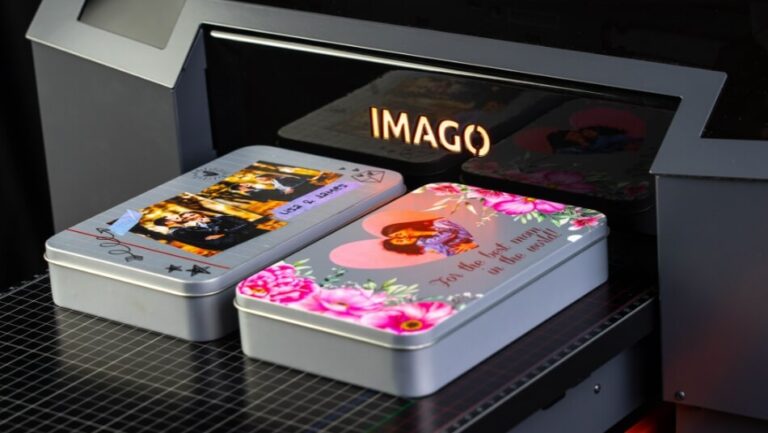
- Cardboard cases with full-color graphics
- Combine print with UV varnish for added perceived value
- Made for short-run packaging production
UV on paper and cardboard hits high quality without the drying time that holds up other methods. Print comes off the machine ready for the next operation. It’s the right pick when the marketing materials need to look high-end and arrive on a tight deadline.
Composites and unusual materials:
- Composite panels with irregular shapes
- Technical foams and layered materials
- Acoustic panels with decorative print
- Sandwich panels of mixed structure
- Silicone as a specialty substrate (requires primer and surface preparation)
Silicone and rubber materials require flame treatment before applying UV coatings to ensure proper adhesion, as their surface activity is typically low.
If your material doesn’t fit any of the categories above, send it to the Proof Lab. We’ll test print feasibility and set parameters before you plan production.
UV printing on promotional products and personalized items
Promotional products are where UV stretches its legs. Direct printing on the finished product cuts out stickers and labels entirely. UV inks give you durability and resistance to handling.
Typical promotional products:
- Power banks and chargers with company logos
- USB drives with full-color graphics
- Notebooks and planners with personalization
- Phone cases
- Keyrings and tags
- Pens (on the flat surface)
- Ceramic mugs (with the daily-use caveat above)
- Lanyards and fabric tags
- Canvas prints for fine art and high-end wall displays
What digital UV gives you:
- Profitable from 10-20 pieces with different names or graphics
- No matrices, no screens to set up
- Quick switch between projects
- Variable numbering and unique codes built in
A UV printer means you handle promotional, decorative, and industrial work on the same line. That’s a real argument for the investment – you’re not buying a single-purpose tool.
UV vs other technologies – material flexibility
How does UV compare with screen printing and pad printing? The big difference is material flexibility.
Screen printing:
- Needs a separate screen for every design and color
- Mostly limited to flat, uniform substrates
- Profitable at very large runs (thousands of pieces)
- Design change = new screen = time and money
Pad printing:
- Great for small, curved objects
- Color limitations (fewer layers)
- Needs matrix prep
- Precise but inflexible
UV printing:
- Digital – no matrices, screens, or forms
- Prints across different surfaces with no setup change
- Profitable from a single piece
- Variable content at no extra cost
- High resolution and full color
When does UV come out ahead?
- Short runs and personalization
- Different materials in the same production day
- Variable content (numbering, codes, names)
- Prototypes and samples before a major run
When does screen printing still win?
- Hundreds of thousands of identical pieces of one design
- Very simple graphics (1-2 colors)
- Specialty inks (conductive, thermochromic)
In real production, a UV LED printer lets you move from acrylic in the morning, to aluminum in the afternoon, to wood by the end of the day – no technology swap, no new tools. That flexibility is one of the main reasons clients invest in the technology in the first place.
The environmental side of UV printing
UV gets picked more often these days for environmental reasons. Polymer-based UV inks cured by ultraviolet light don’t release volatile organic compounds (VOCs), which makes the process cleaner than traditional methods.
LED UV lamps use less energy than older mercury lamps and don’t generate ozone, which adds another point on the green side. UV also wastes less ink – close to 100% of what gets dispensed ends up on the substrate.
Cured prints are inert – they don’t shed particles, they meet safety norms for promotional materials and packaging applications, and they’re safe for users and operators alike.
How to match substrates and parameters to your production
Material choice drives your margin, your lead times, and your complaint rate. Choosing the right substrate for UV printing is crucial to ensure optimal results, as it directly affects print quality, ink adhesion, and curing. Worth thinking through before you buy a machine, not after.
Steps to a sound material strategy:
1. Define your business segment
- Promotional gadgets – varied materials, short runs
- Industrial markings – metals, plastics, compliance requirements
- Interior decor – glass, wood, large formats
2. Pick your core materials
- Identify the 3-5 substrates that will cover 80% of your production
- Check supplier availability and pricing
- Understand customer requirements (durability, aesthetics, norms)
- Remember, choosing the right substrate can expand your product range and help grow your business by attracting more clients.
3. Test before you commit
- A few sheets or prototypes through the Proof Lab
- Adhesion, abrasion, chemical resistance tests
- Color and detail evaluation
4. Set production parameters
- Right ink-primer combination for the material
- Print speed that balances quality and throughput
- Head height matched to substrate thickness
We help match all of this against your actual materials at IMAGO Printer. Instead of running your own trial-and-error on big batches and risking the loss, talk to one of our technologists. Fewer trial runs means less wasted material and fewer reclaimed orders.
Wrap-up and next step: test your own materials
The takeaways from this guide:
- UV printing across different materials means one investment, many markets – gadgets, signage, décor, packaging
- Profitable from a single piece – personalization and short runs without matrix costs
- Durable prints that hold up against scratches, moisture, and weather
- Wide application without VOCs – safe for operators and the environment
Substrate groups worth remembering:
- Plastics – from ABS to dibond
- Metals – aluminum, stainless steel, coated sheet
- Glass and ceramics – panels, tiles, porcelain
- Wood and MDF – fronts, panels, premium gadgets
- Special materials – leather, textiles, paper, composites
- Flexible substrates – vinyl, banners (ideal for outdoor graphics and advertising displays)
Top rigid substrates for UV printing include acrylic, metal (aluminum, steel, brass), glass, wood (MDF, plywood), and PVC and foam boards, which are ideal for applications like signage and décor.
Roll printing (roll-to-roll) is an efficient method for producing banners and vinyl graphics, especially for large-format and outdoor applications.
Each group needs its own parameter set. Primer, number of white layers, head height, UV intensity – those are what decide whether the print lasts and whether it looks right.
The practical step from here:
Send samples of your materials to the IMAGO Printer Proof Lab. We test them, dial in parameters, and give you specific recommendations – before you invest in a machine.
Ways to talk:
- Conversation with an applications expert about your needs and materials
- Live demo at our showroom – see the printer running
- Online testing with a results review for anyone who prefers to start remotely
We don’t sell you “just a machine.” We help you build a UV print process that’s profitable on the substrates you actually work with. That’s when the investment makes sense – when you know your materials fit the technology and the margins work.
Get in touch and see what UV printing does for your production.