Sustainability in UV printing: how SAPPHIRE combines ecodesign with long-term investment value

The EU Ecodesign for Sustainable Products Regulation (ESPR) is rolling out in stages and pulling more and more categories of industrial equipment into its scope. Pressure for a “right to repair” is rising in parallel, and FESPA has published an anti-greenwashing guide for the print industry – a clear signal that ESG auditors and retail buyers no longer accept vague claims.
In practice, the production director at a B2B printing operation now has to answer a specific set of questions:
- How much waste does the process generate?
- Can the machine be upgraded?
- What happens to the ink after a production cycle?
- What standards do the inks meet?
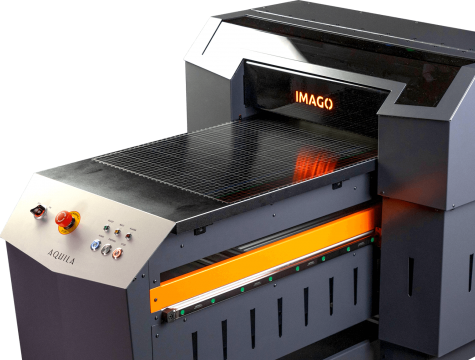
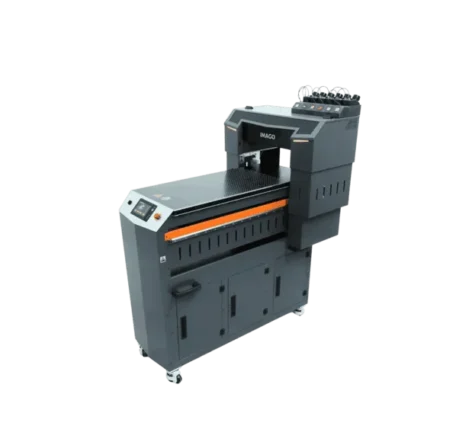
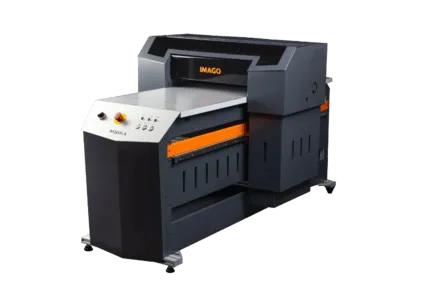
These questions don’t catch the SAPPHIRE engineering team off guard. The machine was built from the start as an answer to the real demands of a European industrial printer. Not as a rebadged import, but as a platform designed in Poland for longevity, easy service, and closed-loop material flow.
Engineered & Made in Poland isn’t a slogan on a chassis. It’s an operational fact you can see in the engineering decisions.
Seven areas of ecodesign in SAPPHIRE
1. A modular platform, not a single-use machine
SAPPHIRE isn’t a one-shot investment. The modular build lets you swap print sections for newer generations, add modules over time, upgrade UV LED lamps, and step up firmware versions without replacing the whole unit. When modules wear out, IMAGO carries out full refurbishments – the machine comes back close to factory condition with the warranty restored, instead of going to scrap.
For context: the typical UV printer on the market runs for 5-7 years. SAPPHIRE is engineered for 10+ years of active service.
2. Closed-loop white ink circulation
White ink in UV printing is the fastest to generate waste and the most prone to pigment settling. SAPPHIRE uses a proprietary recirculation and mixing system for white ink, built on Velco components. The ink stays in motion at all times, which eliminates sedimentation, lowers consumption, and delivers consistent coverage.
- Less ink in the waste stream
- More stable first-piece quality
- Fewer start-up trial runs every shift
3. A standard 5L waste container with sensors
Liquid waste from the UV printing process flows into a sealed 5-litre container. The seal limits VOC evaporation into the production hall. Sensors in both the waste container and the ink tanks raise an alarm before anything turns into a problem. The 5L standard format means your operation can arrange legal disposal through any certified hazardous-waste contractor – no oddly-sized containers requiring a specialist handler.
4. Proprietary dust extraction and air filtration
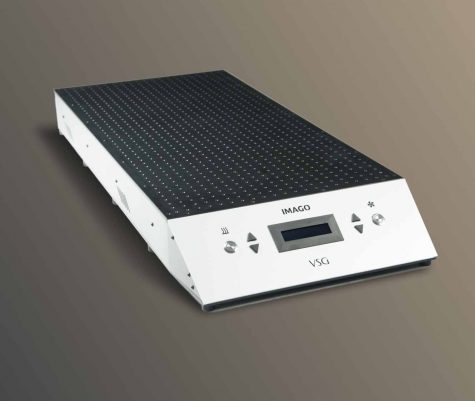
Operator health is treated as a design requirement, not an add-on. The dust-extraction system spans the full width of the print zone inside the printing section. Replaceable filters catch the particulates kicked up when working different substrates. A vacuum system built into the table absorbs odours from uncured ink.
Two UV lamp zones, programmable independently, can run as pinning and curing lamps at the same time – which shortens the window during which ink stays uncured, the biggest single source of fume emissions.
Operators don’t need to wear masks. Health-and-safety audits get easier.
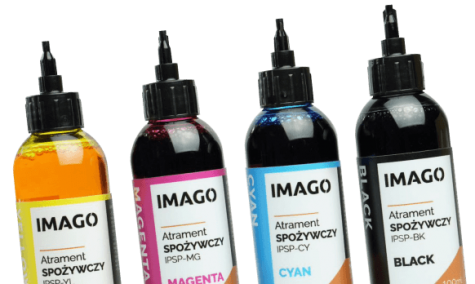
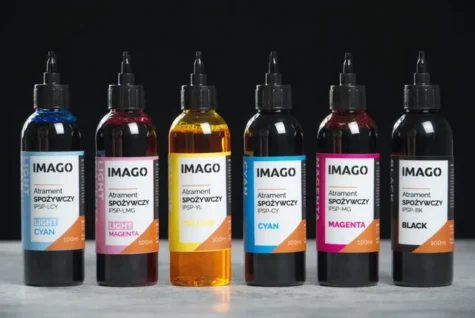
5. Inks compliant with REACH, EN 71-3, and EuPIA – made in the EU
SAPPHIRE inks are produced at European facilities and matched to specific certifications:
- REACH – chemical substance registration
- EN 71-3 – applications aimed at children
- EuPIA – food-contact packaging
- GREENGUARD Gold – when the end customer requires it
Proof-Lab IMAGO in Warsaw tests and confirms compliance on your actual material. No dependence on a supplier half a world away – which means a shorter logistics chain, a smaller transport carbon footprint, and predictable supply.
6. Energy-efficient UV LED lamps with zonal control
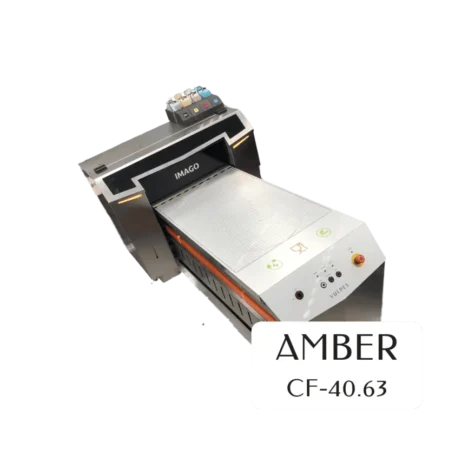
SAPPHIRE UF-40.63 runs at 400 W on a 400 x 630 mm print bed. UV LED lamps consume a fraction of the energy of classic mercury lamps and contain no mercury at all.
Independent power control over each of the two lamps lets you match the output to the application – you only spend energy where it actually cures ink. Lower electricity bills, less heat generated, less load on the hall ventilation.
7. Direct manufacturer service and remote diagnostics
IMAGO services SAPPHIRE directly from Warsaw. The service team works hand-in-hand with engineering and production – field feedback flows straight back into the machine design, and customers don’t wait weeks for parts to come through a middleman.
Remote inspection of the print system resolves most issues without an on-site visit. The machine generates auto-reports on errors and operating states. Operators have on-board instructional videos accessible via QR codes, plus full technical and operating documentation.
Most routine maintenance can be done by the operator alone – from replacing dampers and flushing lines to swapping out a printhead.
Numbers that matter in an auditor conversation
ESG auditors don’t ask about resolution. They ask about your waste stream, energy consumption, ink management, and what will happen to the machine in eight years. SAPPHIRE has a documented answer for each of those questions.
- 400 W – power draw of SAPPHIRE UF-40.63 (400 x 630 mm print bed). Consumption on par with a mid-range household appliance, not an industrial UV dryer.
- 5L – capacity of the standard waste container. Disposal through any certified contractor, no headaches around odd container sizes.
- 10+ years – planned service life of the machine, made possible by modularity and the module upgrade programme.
- ΔE ≤ 2 – a typical colour-consistency criterion verified at Proof-Lab before FAT (Definition of Done).
- 2 independently controlled UV lamp zones – less energy, fewer fumes, broader application range (pinning + curing, gloss vs. semi-matte).
- 8 printhead channels – configuration flexibility (CMYK + white + varnish + custom) without forcing you up to a bigger model.
Why look at SAPPHIRE through the ecodesign lens?
Because it translates into four things that actually carry weight in an investment decision:
- Lower total cost of ownership (TCO) – an upgrade beats replacing the whole machine, and lower ink and energy use shows up in the monthly bills.
- Less risk in ESG audits, CSRD reporting, and tenders with large retail chains – documented answers instead of vague claims.
- A more attractive workplace on the production floor, where operators have a choice: a quiet machine with filtration and safer inks reduces turnover and makes recruitment easier.
- A real argument for your own sales conversations with customers, who increasingly have to document their own supply chain.
SAPPHIRE is a UV printing platform, not a single-use machine. Upgrade instead of replacement. Closed-loop materials. Service straight from the people who built it. These were design decisions from the first prototype, not bolted on later “for ESG”.
The next step
Going into a capital-equipment investment based on a brochure isn’t a smart move. Test SAPPHIRE on your own material at Proof-Lab IMAGO in Warsaw instead. The team selects inks against the specific certifications your customers demand, verifies adhesion, walks you through a TCO report, and shows you the acceptance criteria (Definition of Done) before any investment plan goes on the table.
After the tests you get a report, a TCO estimate, recommended presets, and an integration plan. Only then do we talk about configuration and SLA.
Book a technical conversation: contact us