Single Pass Production Line Integration: More Throughput, No Downtime

What is single-pass technology? It’s a digital printing method where the material passes under the printhead only once, which lifts output and shortens production time. Manufacturers are under real pressure right now: meet rising demand for personalisation, short runs and print-on-demand, without losing throughput or running up huge costs. Single-pass printing is the answer. The market is growing fast – forecasts put it at around 20 billion USD by 2033, at a compound annual growth rate (CAGR) of 11.3%. Its strength is flexibility and scalability, which lets companies react quickly to shifting demand.
For a lot of production and finance directors, though, a new technology brings one word to mind: downtime. Replacing the whole machine park rarely makes economic sense. At Imago we take a different route – retrofitting single-pass modules into the lines you already run. That kind of integration opens up process automation, cuts waste and lets you switch jobs without stopping the line, which means better quality and lower cost. This article walks you through the process step by step and shows that modernising a plant can be smooth, safe and well worth the money.
Single-pass printers also take up less floor space than laser printers – which matters when production space is tight.
Single-pass: the basics
As market expectations rise and packaging keeps changing, single-pass has become a foundation of modern production. It lets you match the print process to each customer’s needs – short runs especially, and personalised designs on corrugated board. You print in real time, react to order changes on the spot and roll out new designs without long line changeovers.
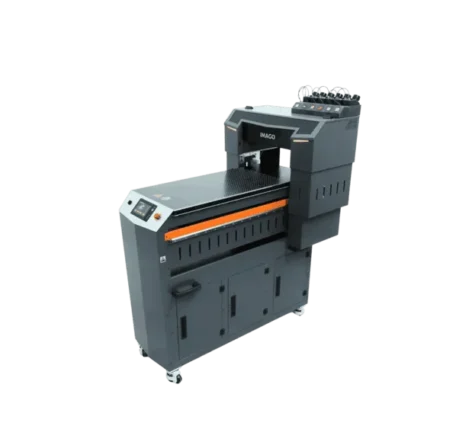
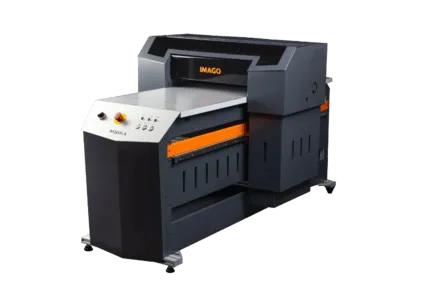
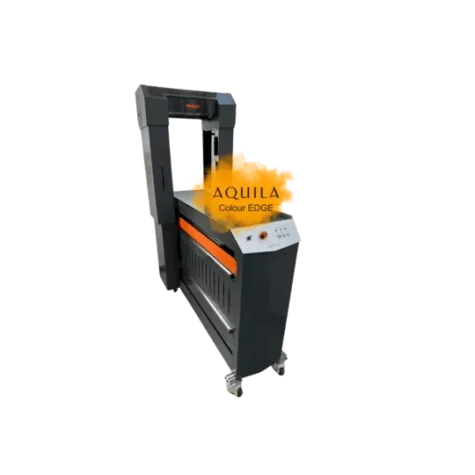
Single-pass isn’t only about speed. It holds print quality across formats and materials, particularly with fully industrial single-pass UV LED printers. Advanced printheads and smart software keep colour consistent and detail repeatable from batch to batch – exactly what packaging and labels demand. Operating costs drop too: no printing plates to prepare, no lengthy make-ready, so you save real time and material.
It’s built for what comes next: flexible on-demand production, quick response to new trends, and full control over quality and output – especially with industrial UV single-pass printers designed for the job. The result is a step up in efficiency, and the confidence to take on demanding work at high precision and low risk.
Phase 0: Audit and ProofLab – decisions backed by evidence, not guesswork
Before a single mechanical part goes onto the shop floor, integration starts in the lab. This is where careful planning and fitting the technology to the line’s requirements pays off. Phase 0 is the foundation that gives engineers and management full confidence the system will perform as planned. At Imago we do this through rigorous testing in our ProofLab.
Among other things, we measure the surface tension of different materials – film, paper, plastic – to keep the process repeatable and precise. The ProofLab results carry straight into a working deployment, so the solution performs in everyday production.
Drop chemistry and physics: the key to perfect adhesion and print quality
Successful qualification depends on helping the team understand how ink and substrate interact before integration decisions are made. We start by measuring the surface tension of the customer’s materials – plastics, metals, glass – using specialist test inks. If a line of test ink beads up and shrinks within seconds, the substrate’s surface tension is lower than the ink’s, and the surface needs treating (corona, for example) or the ink chemistry needs adjusting.
Next comes drop-watching. In modern industrial piezoelectric heads, ink drops fire at enormous frequency, and a single drop can be as small as 1.3 picolitres. In the ProofLab we check shape consistency, ejection speed and the absence of satellite drops that would soften edge sharpness. Getting drop formation right is what delivers high print quality and a reliable line. Dial these parameters in and the quality holds at speeds around 120 metres per minute.
Tune the print parameters to the specific material and you get higher quality, repeatability and a more efficient process.
Digital Twins and AI simulation
By 2026 we no longer rely on physical trials alone. We use Digital Twins – data-driven predictive systems. We build a virtual replica of your line to simulate how a new print module affects schedules, line load and potential bottlenecks. That lets teams create and validate different integration scenarios and process changes with no risk to live production. Specialist software does the heavy lifting here, running the simulations, automating the analysis and keeping tests repeatable. You can validate the integration virtually and reach double-digit cuts in deployment cost.
A look ahead: given how fast AI is moving, we expect predictive algorithms will soon set the ideal print parameters – head temperature, firing frequency, ink composition – from a chemical scan of the customer’s material alone, cutting the need for physical trials and shrinking R&D from weeks to hours.
Step by step: how integration actually happens, on the hardware and in the system
Once we’re sure about the print technology, we move to the integration itself on the line. It splits into two areas: the mechanical side (hardware) and the IT side (software). The right equipment matters here – single-pass printers, cutting plotters, and conveying systems – all matched to the requirements of the manufacturing environment and designed to connect equipment, software, and real-time process data into one workflow.
Signage is a good example: artwork and vectors prepared in Adobe Illustrator or CorelDRAW feed fast, precise printing and cutting of advertising signs across different substrates. Integration headaches often trace back to working on files without the right plugin or automation, especially when one plotter has to handle many jobs by hand.
Single-pass prints across a wide range of substrates, which makes it a fit for industrial work. It shortens production time, slots into automated workflows, and its higher processing speed lifts output well above traditional methods. That lets us test different integration options in a virtual replica, creating and validating integration scenarios before live production.
Mechanical integration and web tension control
The biggest physical challenge when adding single-pass modules to roll-to-roll lines is web tension control. At 100 m/min, even a tiny slip or vibration throws off colour registration and wrinkles the material.
To prevent that, we install closed-loop control systems. They use direct tension sensors (load cells) that measure the force the web exerts on the guide rollers. The system compensates automatically through dancer rollers and servo drives, keeping the material moving perfectly smoothly under the fixed print bar.
IT/OT integration: the language of the modern factory
A print module can’t be an island – it has to become part of the factory. That means joining the operational world (OT – PLC controllers, sensors) with the IT world (MES and ERP systems). For the integration to work, designs go to the machines in the right formats, such as DXF or PLT, which keeps the design software and the production equipment compatible. Colour parameters travel to the machines too, so production stays consistent. The single-pass system also talks to the line’s master controller to sync line start/stop and handle faults.
Busting the myth: does integration mean weeks of downtime?
Production directors’ biggest fear is a line stopped for weeks. The IT/OT layer must establish horizontal and vertical networking so machines from different manufacturers can communicate across every control level. With traditional, monolithic printing machines, that fear is justified. But moving from pad printing, screen printing or offset to single-pass DTO (direct-to-object) is a genuine technological shift – faster, more flexible, more economical production. The payoff isn’t only compatibility with different file formats and systems; it’s higher speed, greater output and lower production cost than traditional printers. Single-pass UV printing cuts working time by as much as 81%, helping increase throughput, and it plugs into automation-ready workflows. Modern single-pass modules are built on a modular, plug-and-play architecture.
Because most of the configuration and testing (ProofLab) happens off the customer’s line, the physical install of the module onto an existing conveyor or web-guiding system is quick. The basics – mechanical mounting, connecting power and industrial networks, axis calibration – can take a handful of hours rather than weeks. A centralized control approach synchronizes all machinery through one software system, reducing manual handoffs and keeping upstream processes aligned, allowing the line to stay flexible as requirements change. Assessing existing software, control factors, and line parts is also necessary for engineered integration across the different applications businesses use.
Single-pass also removes the daily operational stoppages by design. No printing plates to prepare (as in flexo), no roller washing, no long make-ready – changing a job comes down to loading a new digital file, making changeovers fast and cutting waiting to seconds. Connected production data then creates a continuous information flow, so teams can keep improving the line after go-live.
TCO, ROI, OEE and production efficiency: the business and operational case for single-pass
For a CFO, the hard numbers are what count. A single-pass module has to stand up on Total Cost of Ownership (TCO) and Return on Investment (ROI), which is why understanding UV printing costs and how to bring them down matters. One example: a company that integrated single-pass into its line and saw a clear gain in efficiency and production flexibility. Single-pass also removes the daily operational stoppages that build up between separate stages, so products move faster without waiting in queues between steps, cutting lead times. With multiple steps happening in one continuous flow, it also reduces manual handling and setup between operations.
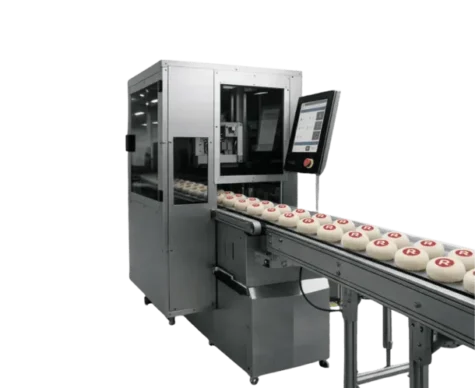
The image on a pack does a lot of the communicating – visual and tactile together – and it lifts both recall and perceived value. Single-pass systems let print shops get the full value out of packaging, from short runs to integration with automation and ERP, especially when they’re built on industrial-grade kit like IMAGO’s US-series UV printers. Single-pass and multi-pass inkjet together bring speed, quality and data into packaging production. Synchronized upstream and downstream capabilities further improve efficiency by eliminating bottlenecks and keeping material flow continuous.
Maximising OEE (Overall Equipment Effectiveness)
OEE is the ultimate measure of factory efficiency. The formula:
OEE = Availability × Performance × QualityIntegrated flow also lowers inventory costs by reducing work-in-progress stock sitting on the shop floor. It lets each piece move continuously through the fabrication process, cutting cycle times and opportunities for error, though changing output rates requires proportional adjustments across the entire line.
Single-pass pushes all three up sharply:
- Availability: minimal setup time and no plate changes.
- Performance: speeds of 100-150 m/min leave traditional multi-pass (flatbed) plotters, which manage a fraction of that, far behind.
- Quality: AI vision systems correct errors on the fly and cut the scrap rate hard. In practice that means automated application of designs or labels with real-time quality control, which translates into measurable gains and a cleaner integration with the line.
Hidden costs and TCO
Traditional wide-format systems carry heavy hidden costs. Head purging on older machines, for instance, can waste as much as 11% of expensive ink. In Imago’s modern modules we use heads with internal ink recirculation, which stops pigment from settling (white ink especially), clears nozzle blockages and brings TCO down hard. The modular design adapts easily to industrial settings, so you can deploy fast and change processes when you need to.
Then there’s energy. Modern UV LED curing modules draw an average of just 2.2 kWh – about the same as a household kettle. Unlike traditional mercury lamps or thermal drying, UV LED needs no warm-up and no complex ventilation, so the electricity savings show up immediately. And automating the line through single-pass integration trims operating costs further and keeps waste down.
Flatbed vs single-pass: print width and industrial comparison
To make the difference concrete, here’s a side-by-side of the key production parameters for each printer:
| Operational parameter | Multi-pass printing (flatbed) | Flow printing (single-pass) |
|---|---|---|
| Production speed | Low (1-30 m²/h) | Very high for high speed inline work (up to 120-150 m/min) |
| Changeover time | Medium (needs material positioning) | Instant (swap the file on the fly) |
| Line integration | Difficult (often needs offline cell work and structural support constraints) | Smooth (mounts straight over the conveyor/web) |
| File formats | Handles DXF, PLT, PDF | Handles DXF, PLT, PDF |
| Ink used on maintenance | High (frequent purging) | Low (in-head recirculation) |
| Best fit | Short runs, prototypes, rigid materials in unusual shapes | Mass production, large-scale personalisation, packaging, labels, and corrugated materials |
Using the right file formats – DXF and PLT – keeps design software, CAD systems and production machines compatible, which makes data transfer easier and reduces the risk of errors. These formats are universal and integrate easily with different devices. In many setups, the system is equipped to print directly onto moving products in one pass. A rigorous preventative and predictive maintenance routine is essential to avoid cascading downtime in single-pass systems and protect TCO.
Specialist software for production management and machine integration, including plugins for Adobe Illustrator and CorelDRAW, automates processes, raises output and standardises work across multiple stations.
After go-live: crew training, diagnostics and peace of mind (SLA)
A successful deployment doesn’t end when the last bolt is tightened and the software boots up. Single-pass changes how the shop floor works. The operator’s role evolves – from a machine technician into a process engineer who manages data flow, colour and system diagnostics.
That’s why we put so much weight on training at Imago. We teach operators to work the HMI interfaces intuitively, manage colour profiles (RIP) and handle basic maintenance.
We also provide “peace of mind” through advanced service agreements (SLAs). Using Edge Computing and AI algorithms, our systems offer predictive maintenance. The machine flags a filter that’s due for a change, a nozzle losing output or web-tension drift before any of it turns into a breakdown. Paired with remote diagnostics, that data helps keep production running reliably and supports continuous improvement after go-live.
The bottom line
Integrating a single-pass module into an existing line is a strategic move – a step change in output, flexibility and profitability, without building infrastructure from scratch. Rigorous ProofLab testing, a modular architecture, open communication standards (OPC UA/MQTT) and advanced mechanical control make the process predictable, safe and low on downtime risk, while helping the architecture continue to support future changes and added capabilities without major disruption.
In practice, single-pass integration delivers real gains: faster production, less waste, lower energy use and instant readiness for personalised orders matched to your production.
Wondering how single-pass will perform on your materials and how fast it pays back in your plant? Talk to the experts at Imago. Book a visit to our ProofLab, bring your production substrates and let us prove on hard data how we’ll optimise your production. Let’s take the first step toward the factory of the future – no risk, no guesswork.